by Safesport ID | Apr 27, 2016 | Events
The Norseman Xtreme Triathlon in Norway has become the most extreme and demanding triathlon in the world. At the same time it’s one of the most stunning and unique events. Let’s find out why. The spectacular start of the Norseman Xtreme Triathlon Have you ever thought about starting a triathlon jumping into the cold water of the Norwegian fiords? Well then stop imagining because at the Norseman Xtreme Triathlon is possible. Maybe this is not the most unique element of this event, but let’s get real, seeing dozens of athletes jumping into the freezing Norwegian water at sunrise from a ferry is pretty cool. The weather in Norway, as you may imagine is not ideal for a triathlon, and despite being August swimming at 5 am in the morning in the Hardangerfjord fiord is not a piece of cake. “Awesome”, “stunning” or “amazing” are some of the words used by the triathletes at the Norseman Xtreme to describe the bicycle stage. This second stage will take us through the Norwegian mountains, reaching 1200 meters above sea level. During these 180 kilometres, the contestants will have time to admire the beautiful Norwegian nature, surrounded by wild animals. Once we leave the bicycle behind, it’s time to start the marathon. Out of the 42 kilometres of this stage, 25 are flat. After this, the triathletes will climb the local mountain, Gaustatoppen, arriving at the finish line at 1880 metres above sea level. However, due to the remote location of the finish line, only the first 160 contestants will make the final 4,7 km to the peak. Norseman is much more special...
by Safesport ID | Apr 26, 2016 | Health
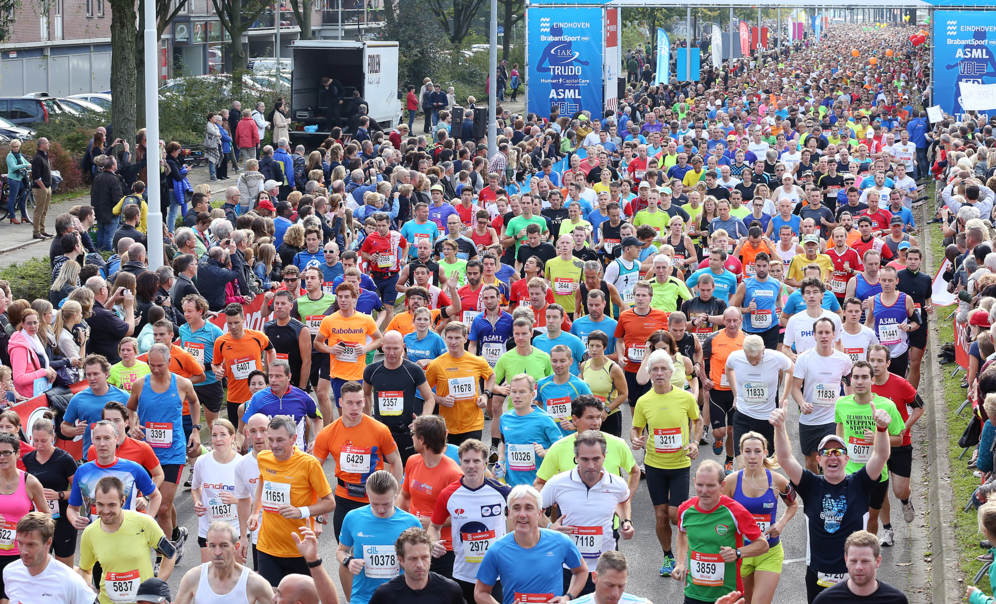
Earlier on, we talked about the problems that people with diabetes type 1 may face when competing in a triathlon. However, today we would like to discuss about the different issues that a person with this medical condition may experience when facing a marathon. Is it possible for a person with diabetes to run a marathon? How to prepare a marathon if you have diabetes? Yes, a marathon is a great challenge for any athlete, and not everybody that participates in one would be able to cross the finish line. Preparation and training are very important, but we also must face it with great respect. However, in the case of a person with diabetes, preparation and training are not only very important, but crucial and must be taken in account with special care and attention. If you have decided to participate in a marathon, the first thing we would like to say is: Congratulations! We assume that you have reached a physical level when you feel you can move to the next challenge and participate in something bigger. In this case, before starting your training, you should visit a medical professional. Your endocrine knows you better than anybody and can provide you with the advice that better fits your needs. Moving on, another important aspect to take into consideration is to keep in mind your previous experiences. How did your body reacted while facing different challenges? What are the aspects that you always keep in mind while training? What problems did you face that help you realize you were making a mistake? In the meantime, try different things: a new...

by Safesport ID | Oct 11, 2015 | Nutrition
Picking up good eating habits around cycling is vital to a successful enjoyable ride. Keep your fluid levels topped up Get into the habit of taking on fluid regularly, whether you are out on the road or not. Water is essential for carrying nutrients around the body and for regulating body temperature. Being dehydrated can lead to a significant drop in performance so make sure you get enough water on board. When the weather is really hot try popping a hydration tablet into your water to replace those electrolytes that are lost through sweat. Don’t leave fuelling to the last minute Have a pre-race carb meal 2 hours before exercise in order to top up your energy stores. Do not make the mistake of over-eating however as this may leave you feeling bloated. You can always top up your energy on the start line with an energy gel. Eat regularly during longer exercise Your body can store enough energy for 90 minutes of strenuous exercise, and then you’ll be running on empty. It’s far better not to let yourself get to that – so don’t risk bonking. Try to get into the habit of eating regularly in order to ensure you maintain performance and avoid getting jelly legs; even the pros can get this wrong. We recommend that 60-90g of carbohydrate intake per hour is optimum and this can be obtained easily from energy drinks, energy gels and bars that are perfect for popping in your jersey pocket. Practice your nutrition strategy in training You wouldn’t do an event without the necessary training so don’t eat during an event...

by Safesport ID | Jun 23, 2015 | Athletes
“In my life I am a looser, I run for vengeance – Io corro per Vendetta” Marco Olmo is a living legend of extreme running. He started late, when the others started to stop. In his “previous lives”, as he says, he has been a farmer, a truck driver and a worker in his village’s cement plant. He is now 66 years old and keeps on running international races Marco is from Robilante, a little municipality of the Piemont Region in north-western Italy. Born into a peasant family, when he was twenty he left the countryside to work in the town’s cement plant . His fate and life have been marked by this choice: still nowadays, notwithstanding his sport successes, he defines himself as a “loser”. Marco Olmo is well known in Europe, and particularly in his native Italy, but stunned many outsiders when he won Europe’s top trail ultra at Mont Blanc (UTMB) twice in 2006 and 2007 aged 58 then 59, ahead of top trail runners. UTMB is one of the hardest and most important endurance races in the world, over twenty hours of uninterrupted running, 167 km (over 100 miles) around the tallest mountain in Europe. An almost unimaginable race, where mental and physical training and personal motivations are fundamental. These are just a few examples of Marco Olmo´s achievements since the 90´s 1996: Marathon des Sables (Marocco) 3rd 1997: Marathon des Sables (Marocco) 3rd 1998: Desert Marathon (Libia) 1st Marathon des Sables (Marocco) 4th 1999: Desert Marathon (Libya) 1st Marathon des Sables (Marocco) 3rd Verdon trail (France) 1st 2000: Desert Marathon (Libia) 1st Marathon des...
by Safesport ID | Jun 15, 2015 | Events
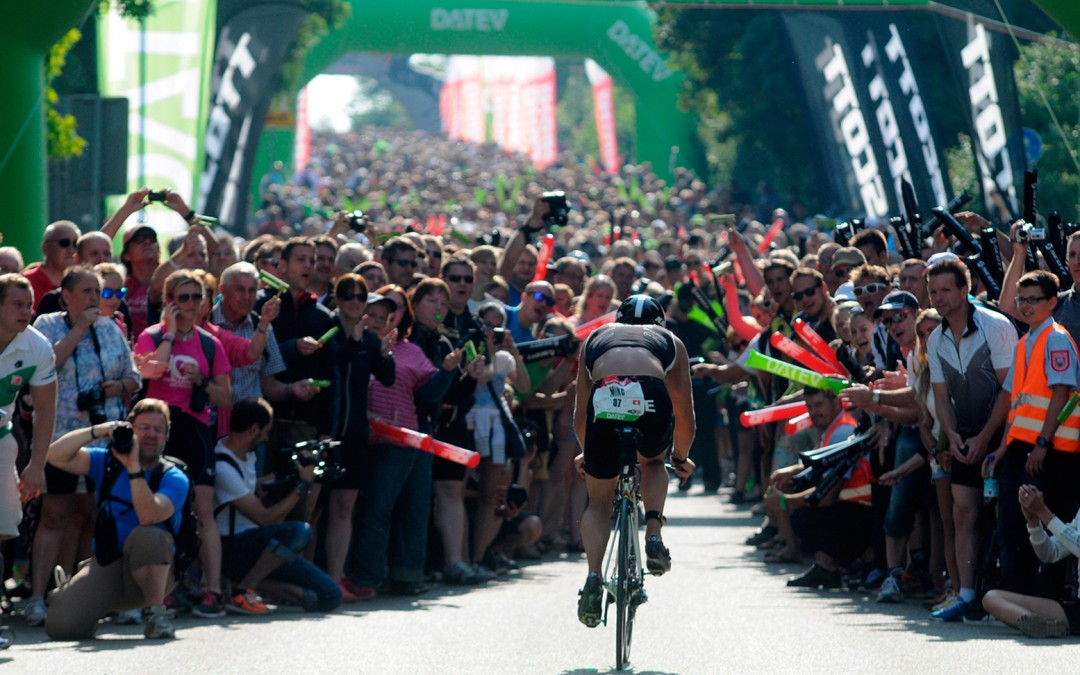
The distance is the Ironman distance, even though the race is not part of the official Ironman series History The race has been held since 1990 on the Ironman distance and since 1984 also on short distance. It was formerly part of the Ironman series, until 2001. It has been held independently from WTC since 2002 with the name of Challenge Roth. These days it is known as DATEV Challenge Roth and it is probably the most important Ironman distance Race in Europe with over 4,000 participants. The Course The first part of the race, the 3.86 km swim event, takes place in the Rhine–Main–Danube Canal around 10 km outside Roth. The subsequent 180.25 km bike course uses a two-lap course on the countryside, the course is mostly relatively flat with a tougher hill once per lap. The final marathon run goes once around a course with several turning points. Mostly the course goes on the same road after each turning point, so competitors meet each other. A major part of the course is along the Rhine–Main–Danube Canal. The finish is in central Roth. World records set in Challenge Roth Men’s record: Jan Frodeno, 2016 – 7:35:39 Women’s record: Chrissie Wellington, 2011 – 8:18:13 Challenge Series Today DATEV Challenge Roth is a successful business model and mother race of the Challenge family. With over 40 Challenge races all over the world it is clear that organizer Felix Walchshöfer never regretted his decision to cancel the contract with WTC in 2002 and create his own Ironman race under the name of Challenge Roth....